
Related Reports
Cross-Country Study: Men and boys and their SRHR in East and Southern Africa
View Now →
Understanding the Network of Norms affecting adolescent sexual and reproductive health and rights
View Now →
Evidence to Action Technical Brief: Social Norms for Adolescents and Young people in Eastern and Southern Africa
View Now →
Scoping Review of Social Norms Interventions
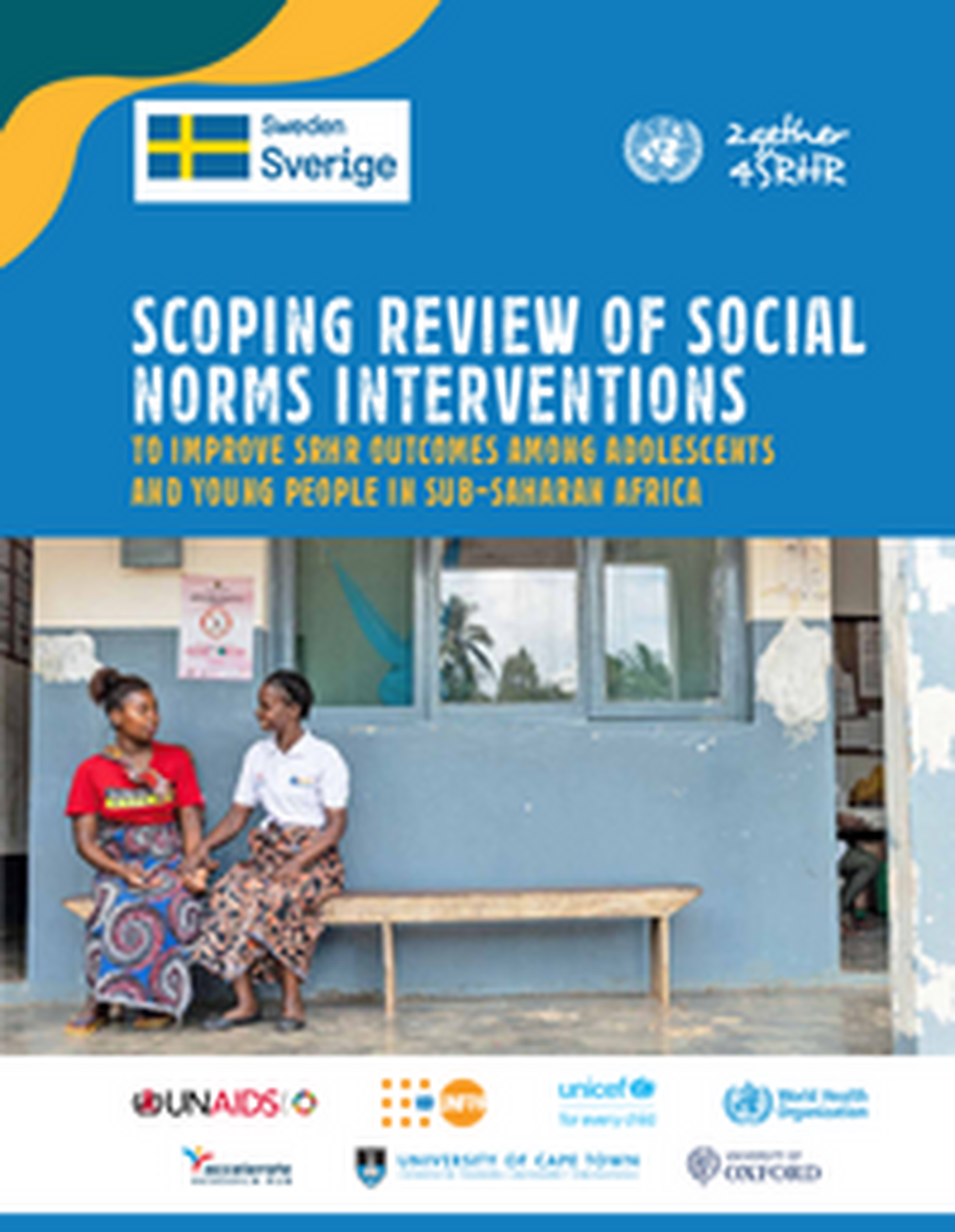
Scoping Review of Social Norms Interventions to improve SRHR outcomes among adolescents and young people in sub-Saharan Africa
3 MB
This report reviews evidence and outcomes of social norms interventions designed to improve sexual and reproductive health and rights (SRHR) among adolescents and young people (10–24 years) in sub-Saharan Africa. The review highlights the importance of comprehensive approaches. Almost all interventions (97.5%) focused on changing social expectations, while fewer focused on publicising and diffusing change (37.5%) and on catalysing and reinforcing change (77.5%). Programmes that included all three elements were twice as likely to be effective than to lead to null or mixed results. The presence of these elements ensured that change in attitudes and behaviours was not only achieved within a small group but allowed for change to be sustained over time and diffused to a critical mass of people. The report identifies key intervention strategies, emphasising the importance of not only comprehensive approaches, but gender-transformative programming, and the role of reference groups. Effective interventions often combine information sharing about SRHR topics and life skills through participatory modalities, delivered in community spaces and guided by trained facilitators. The findings indicate that social norms interventions are most effective in reducing violence and child marriage, increasing contraceptive use, and promoting HIV testing. The review highlights the importance of formative research to understand local contexts, engage communities in intervention design, and address power dynamics. Interventions involving religious, traditional, or cultural leaders can be effective, including in helping design interventions. Identified evidence gaps include a scarcity of quantitative studies on certain SRHR outcomes (e.g., access to medical male circumcision, ART, PrEP) and intervention types (e.g., rights-based advocacy). The review calls for further research on interventions targeting marginalised adolescents and young people, programming for boys and men, and studies in crisis and conflict settings. Addressing these gaps is crucial for understanding what works in social norms interventions and how to scale and sustain successful interventions.
Go to external page: DownloadRelated Reports
Cross-Country Study: Men and boys and their SRHR in East and Southern Africa
View Now →
Understanding the Network of Norms affecting adolescent sexual and reproductive health and rights
View Now →
Evidence to Action Technical Brief: Social Norms for Adolescents and Young people in Eastern and Southern Africa
View Now →